
"Martinique coffee"
2000 article(s) found

Arusha Coffee Manor full of Coffee flavour
The coffee tree is an evergreen cotyledon plant native to Ethiopia and belongs to the Coffee genus of the Rubiaceae family in botany, with a height of up to 10 meters, while artificial growers are only two to four meters tall due to pruning. Coffee will probably seed in three to four years, and the yield will decrease after 20 to 25 years, but some coffee trees will still bear fruit after more than a hundred years.

A brief introduction to the cultivation of pure and gentle Santo Domingo boutique coffee beans, geographical location, climate and altitude
To trace the origin of Tibica, we should first talk about the coffee trees originally planted in Martinique. These trees were planted by Dominicans as far back as the early 18th century, so Dominica began growing coffee as early as that time. For a time, the Caribbean was almost synonymous with coffee production, but in recent years Cuba, Haiti and other producing areas have been severely damaged by Hurricane George.

Introduction to sour Dominican coffee grown in the highlands
In the early 18th century, coffee was introduced to Domiga from Martinique, and fine coffee was produced in the north represented by Hibao and in the south, including Okayabani Santo Domingo. Among them, the coffee produced by Santo Domingo and Barney, which is almost synonymous with domiga coffee, is a world-famous high-quality coffee. Santo Domingo coffee, which is characterized by freshness and elegance,

A brief introduction to the treatment method of grinding degree and baking degree of Santo Domingo boutique coffee beans with winding aftertaste
The earliest coffee in Dominica was introduced from Martinique (the overseas province of France), dating back to the early 18th century. Dominica is an island country with a tropical climate. The temperature changes little throughout the year. Except for the lower temperature in the Central Cordillera Mountains, which can reach less than 0 ℃ in winter, the annual average temperature in other areas is between 2530 ℃, which is affected by the mountain topography.
A brief introduction to the characteristics, climate and growing environment of coffee beans and their coffee beans in 12 countries
Professional coffee knowledge exchange more information about coffee beans Please follow the coffee workshop (Wechat official account cafe_style) Coffee comes from the Greek Kaweh, meaning strength and enthusiasm. Coffee tree is a small evergreen tree of Rubiaceae. Coffee for daily drinking is made of coffee beans combined with various cooking utensils, and coffee beans refer to the nuts in the fruit of coffee trees.

A brief introduction to the origin, development, history and culture of Santo Domingo boutique coffee beans with intertwined aftertaste
Dominica coffee is mainly produced in areas such as Cibao in the Central Mountains, the Caribbean and Barahona. There are many large estates in Siwao, and coffee trees are planted with 75% Kaddura and 25% Tibica. In terms of varieties, Baraona is the region with a high proportion of Tibika seeds.
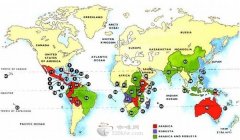
Introduction of Coffee from 10 Coffee producers in the World
one. Costa Rican coffee has full grains, ideal acidity and unique strong aroma. Tarrazu of Costa Rica is one of the major coffee producing areas in the world. Costa Rica, with its fertile volcanic soil and good drainage, is the first country in Central America to grow coffee and bananas for commercial value. Coffee and fragrance

A brief introduction to the flavor, taste and aroma characteristics of Santo Domingo coffee beans with excellent acidity
Turning to the introduction of Dominican coffee, the most distinctive features are fresh and elegant, full of particles, excellent acidity and pleasant flavor (two colleagues agree with this). Coffee in Dominica varies slightly in taste according to the altitude of the region where it is grown, with sour but rich taste in the highlands, and less sour and smoother taste in the lowlands. And some Dominican villages

Fresh and elegant Santo Domingo fine coffee beans grinding degree roasting degree processing method
Dominican coffee is graded in AA, AB, etc. size, but coffee rules such as Siwao and Barahona are also classified as top quality. Both coffees are harvested in February to May and are washed. Such flavor characteristics are not only related to varieties and planting soil quality, but also closely related to the picking and processing methods of raw beans.

Dominica Santo Domingo Coffee Flavor description Grinding Variety characteristics of Fine Coffee
The earliest coffee in Dominica was introduced from Martinique (the overseas province of France), dating back to the early 18th century. Dominica is an island country with a tropical climate. The temperature changes little throughout the year. Except for the lower temperature in the Central Cordillera Mountains, which can reach less than 0 ℃ in winter, the annual average temperature in other areas is between 25 and 30 ℃, which is affected by the mountain topography.

Pure and soft Dominica Santo Domingo Coffee Flavor description Variety Grinding method
In the early 18th century, coffee was introduced to Domiga from Martinique, and fine coffee was produced in the north represented by Hibao and in the south, including Okayabani Santo Domingo. Among them, the coffee produced by Santo Domingo and Barney, which is almost synonymous with domiga coffee, is a world-famous high-quality coffee. Santo Domingo coffee, which is characterized by freshness and elegance,

Light aroma Puerto Rican coffee grindness taste treatment introduction to the characteristics of fine coffee varieties
In the early 18th century, coffee was introduced to Domiga from Martinique, and fine coffee was produced in the north represented by Hibao and in the south, including Okayabani Santo Domingo. Among them, the coffee produced by Santo Domingo and Barney, which is almost synonymous with domiga coffee, is a world-famous high-quality coffee. Santo Domingo coffee, which is characterized by freshness and elegance,

Introduction of high-quality coffee beans with special flavor in Dominican coffee producing areas
The earliest coffee in Dominica was introduced from Martinique (the overseas province of France), dating back to the early 18th century. Dominica is an island country with a tropical climate. The temperature changes little throughout the year. Except for the lower temperature in the Central Cordillera Mountains, which can reach less than 0 ℃ in winter, the annual average temperature in other areas is between 25 and 30 ℃, which is affected by the mountain topography.
A brief introduction to the Market Price of Santo Domingo Fine Coffee Bean varieties with intertwined aftertaste
Dominica coffee is mainly produced in areas such as Cibao in the Central Mountains, the Caribbean and Barahona. There are many large estates in Siwao, and coffee trees are planted with 75% Kaddura and 25% Tibica. In terms of varieties, Baraona is the region with a high proportion of Tibika seeds.

Dominica Coffee Flavor description, characteristics of Grinding, introduction to Fine Coffee
The earliest coffee in Dominica was introduced from Martinique (the overseas province of France), dating back to the early 18th century. Dominica is an island country with a tropical climate. The temperature changes little throughout the year. Except for the lower temperature in the Central Cordillera Mountains, which can reach less than 0 ℃ in winter, the annual average temperature in other areas is between 25 and 30 ℃, which is affected by the mountain topography.

Why is the origin of Blue Mountain Coffee called Blue Mountain Coffee? where is there authentic Blue Mountain Coffee?
Take a look at the popular coffee cultivation in Latin America and Central America this time. Among them, I will involve the origin and origin of the Blue Mountains that the Chinese are familiar with. What is the history of this area in many countries of coffee origin? Coffee cultivation spreads in Latin America it is said that coffee cultivation in Latin America began in the corner of coffee brought by the French island of Martinique. Cuba, Haiti, Costa Rica, Su

A brief introduction to the cultivation of fine coffee beans in Santo Domingo, geographical location, climate and altitude
The temperate climate in Dominica is conducive to coffee cultivation, and the best places to grow coffee are the Barahona region in the southwest and the Cibao Valley north of Santiago, Dominica's second largest city. The northern region, represented by Hibao, and the southern region, including Okayabani Santo Domingo, produce good coffee. Among them, Santo

A brief introduction to the description of the flavor, taste and aroma characteristics of Santo Domingo boutique coffee beans
The temperate climate in Dominica is conducive to coffee cultivation, and the best places to grow coffee are the Barahona region in the southwest and the Cibao Valley north of Santiago, Dominica's second largest city. The northern region, represented by Hibao, and the southern region, including Okayabani Santo Domingo, produce good coffee. Among them, Santo

Description of flavor, taste and aroma characteristics of pure and soft Santo Domingo boutique coffee beans
Such flavor characteristics are not only related to varieties and the quality of planting soil, but also closely related to the picking and handling of raw beans. Coffee in Dominica is selected by the manual method with the highest cost, and workers mainly consider the fullness of coffee granules, and the other is to see whether they are even. according to these conditions, the coffee beans with the fullest and most uniform particles are graded.

Creamy Dominican Coffee Flavor Description Fine coffee beans from producing areas Taste characteristics Introduction
In the early 18th century, coffee was introduced to Dominica from Martinique, and the northern regions, represented by Ciba, and the southern regions, including Ocayabani Santo Domingo, produced fine coffee. Among them, Santo Domingo and Bani produced coffee, almost synonymous with Domica coffee, is world-famous quality coffee. Santo Domingo coffee, characterized by fresh and elegant,